Encyclopedia
What Hroomy does, how to use it, what vitamins and minerals are for, and what on a label is worth a look. These are general food notes, not a diet and not a doctor.
1. What happens here
Hroomy is a food diary. You show a plate, or you write or say what you ate. The app recognizes the dish, counts calories, protein, fat, carbs, fiber, and the vitamins and minerals that are actually in the database, then suggests one next step in plain words. The suggestion says why it was picked: it is already at home, there is little time, it is late, or the food will spoil soon.
The numbers come from food databases (USDA and the European CIQUAL table) and from labels (Open Food Facts). The model only recognizes the dish. If a source has no number, Hroomy does not store a zero and does not invent a trend that you ate more or less.
2. How to use it
First visit
- On the home page choose Sign up: name, email, a password of at least 6 characters, and consent. Sign in and “forgot password” are next to it.
- Fill in the profile: age, height, weight, activity, allergies, country. The daily target is calculated from this. Empty fields can stay empty.
- The language is Ukrainian or English, from the switch in the profile. Country affects familiar dishes and the seasonal calendar, not the language of the text.
The Today screen
Five buttons along the bottom: Today, Menu, a large +, History, Profile.
- Advice for now and the day mode: ordinary, busy, on the road, training. The mode lasts for today. Under the advice is a “because” line, built only from the facts that actually picked it. An allergy removes a dish. It is not a lower score.
- What should I cook? — recipes from what you have at home. This is Hroomy+.
- In season now — a pantry of foods for this month. The list changes by itself when a new month begins. With no country in the profile this is a temperate northern calendar, not the market near home. For a southern country the months shift by half a year. Ukraine uses that same northern calendar.
- Cuisines — a list of countries. Tap a country to open its dishes. Another country closes the previous one. A chosen cuisine is a preference for tips, not a ban on other dishes.
- Recipe from a link — paste a page address. Only what is written on the page is kept. If the full numbers are missing, they are not stored as zero and are not logged that way. Internal addresses are not opened. This is Hroomy+.
- I am at a venue — you type the name yourself. No coordinates are stored and no route is kept. Next time it shows what you had there before.
- Today’s dishes, water, the calorie ring, and micronutrients. A micronutrient appears only when there is a number for it.
- This is everything I ate today marks a full day. Without it, a period average skips the day when any entry on it is unconfirmed.
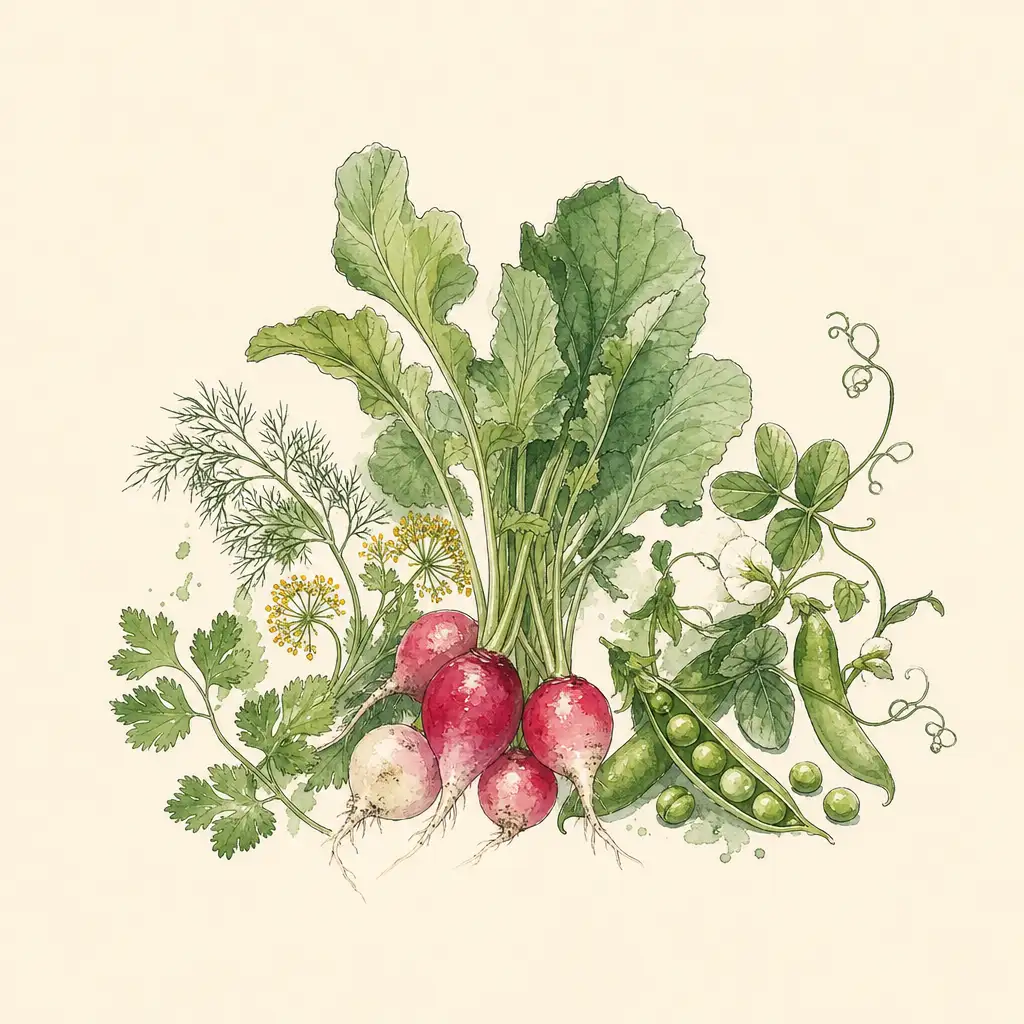
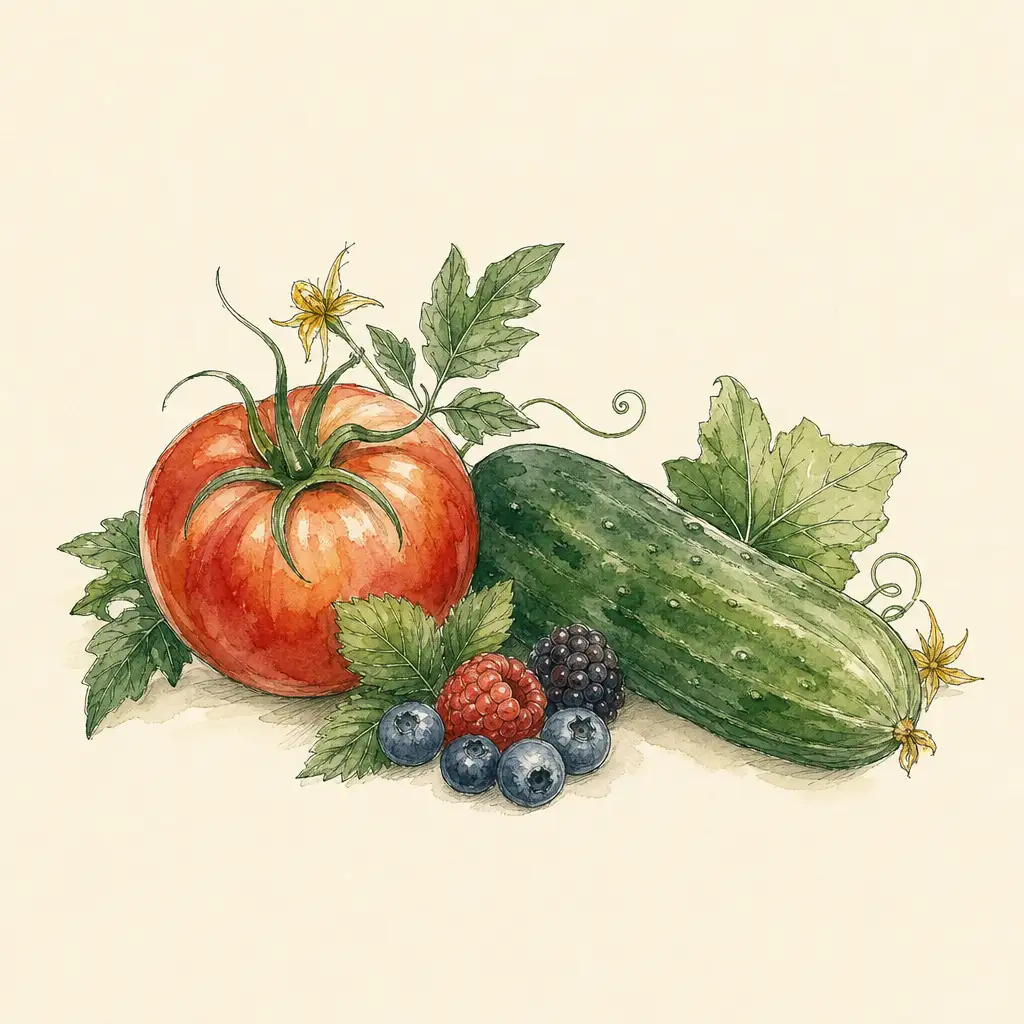
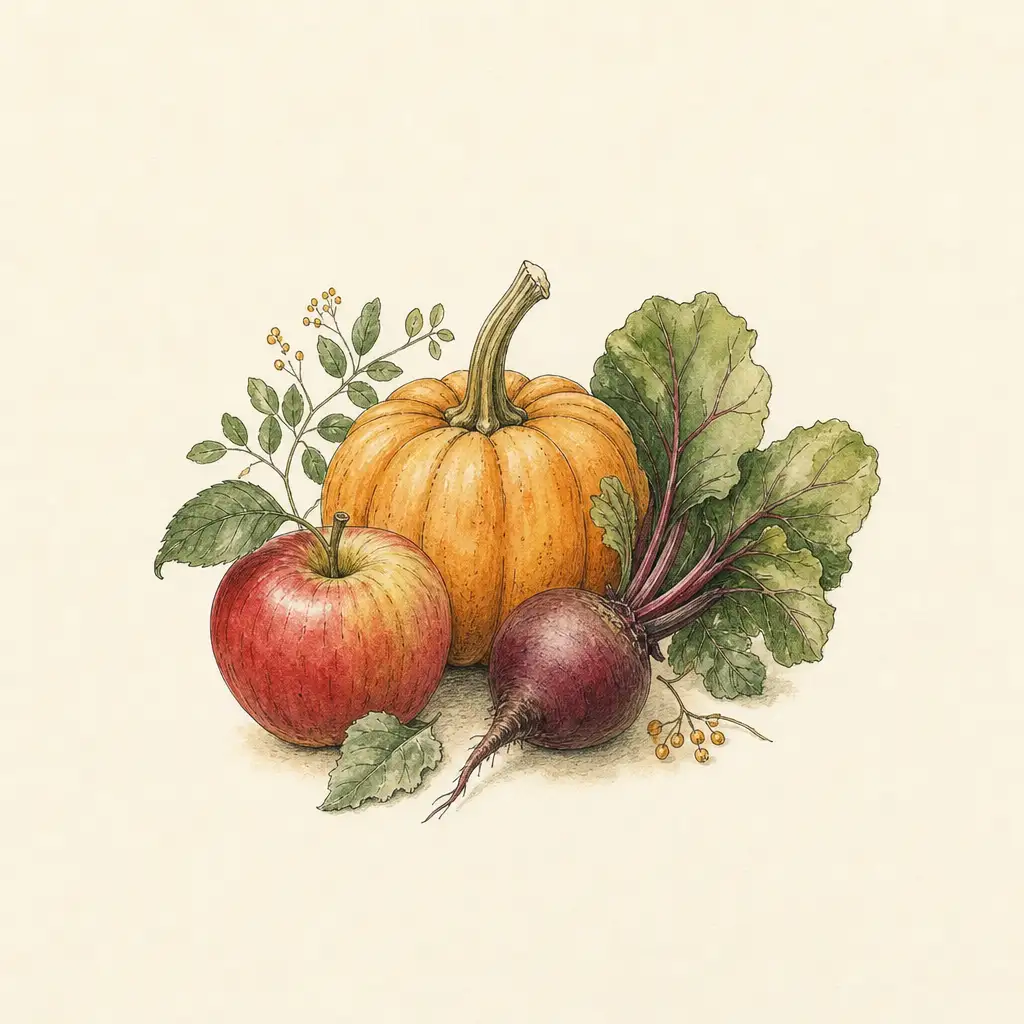
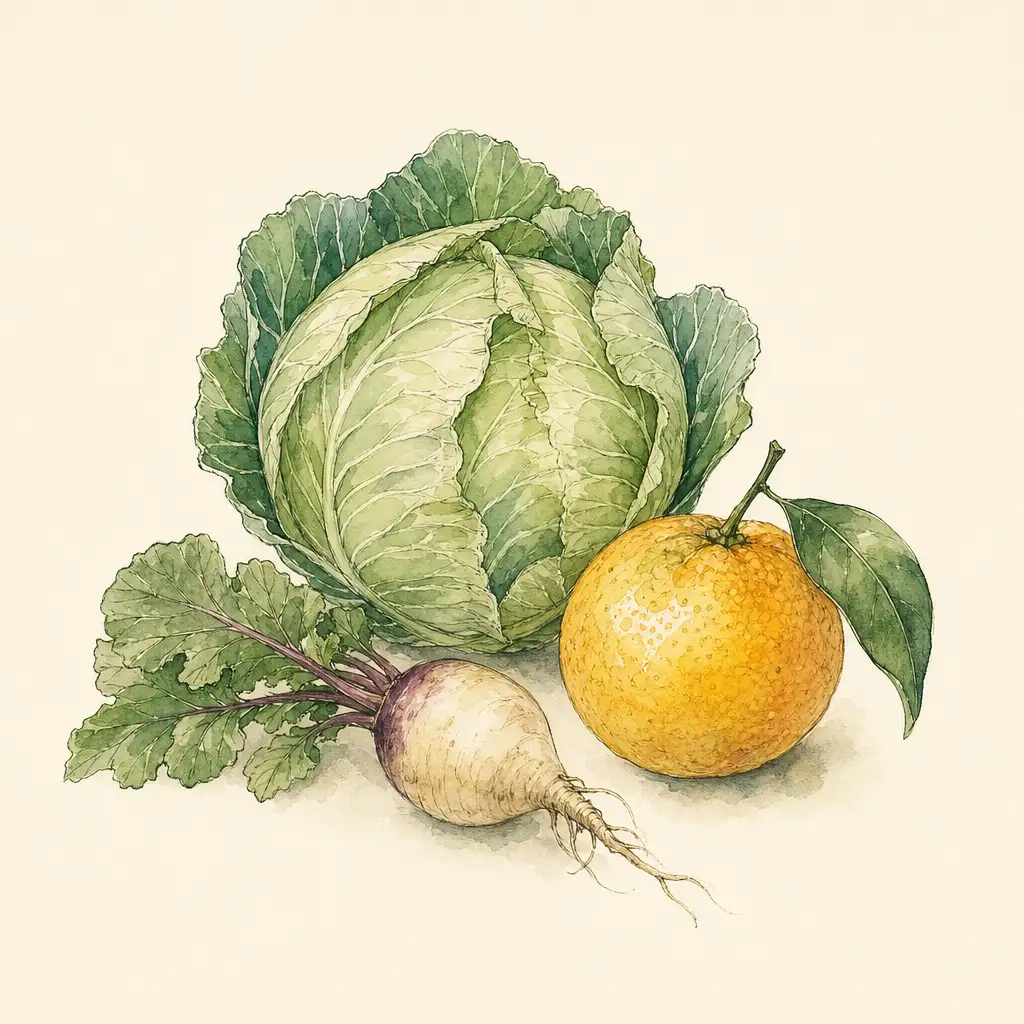
Season, as a picture
This is the mood of a time of year, not the shelf at a shop near home. In the app, In season now changes the month by itself, and for a southern country it shifts that month by half a year.
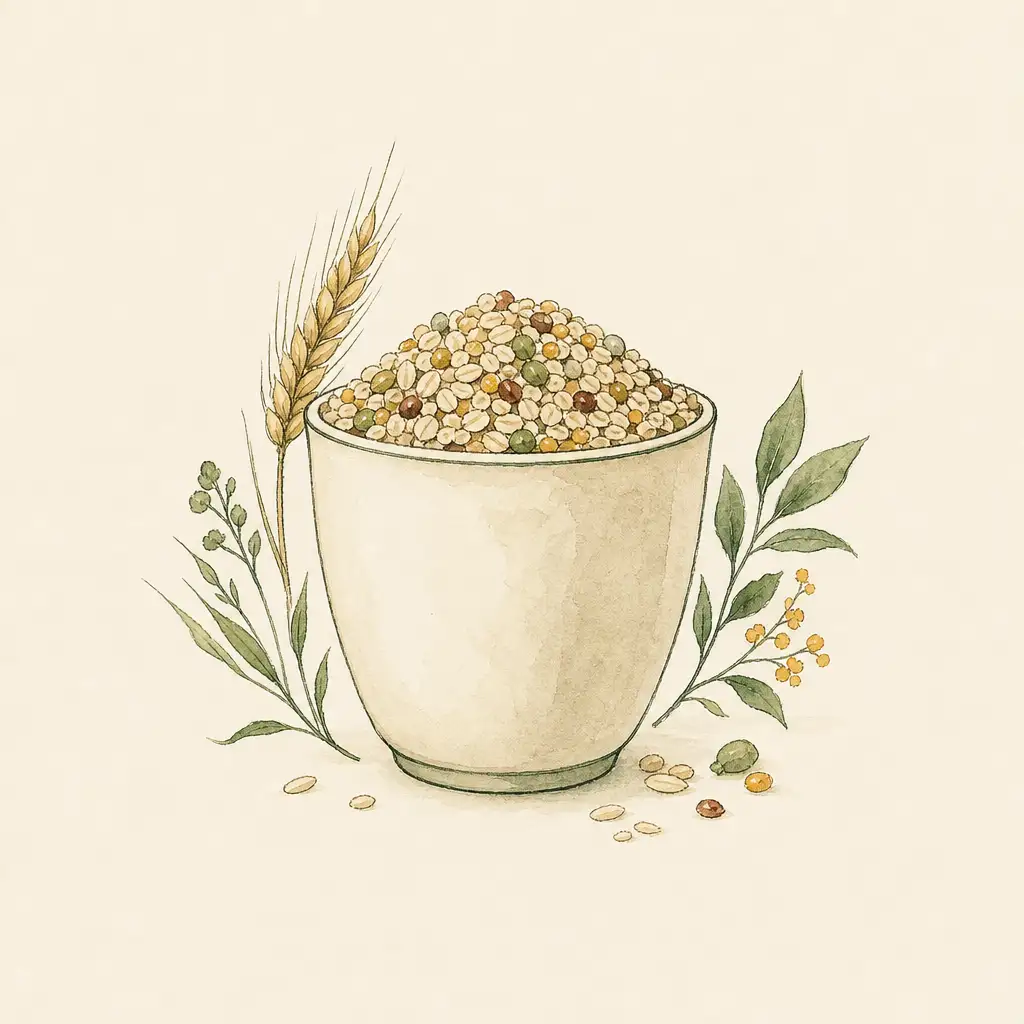
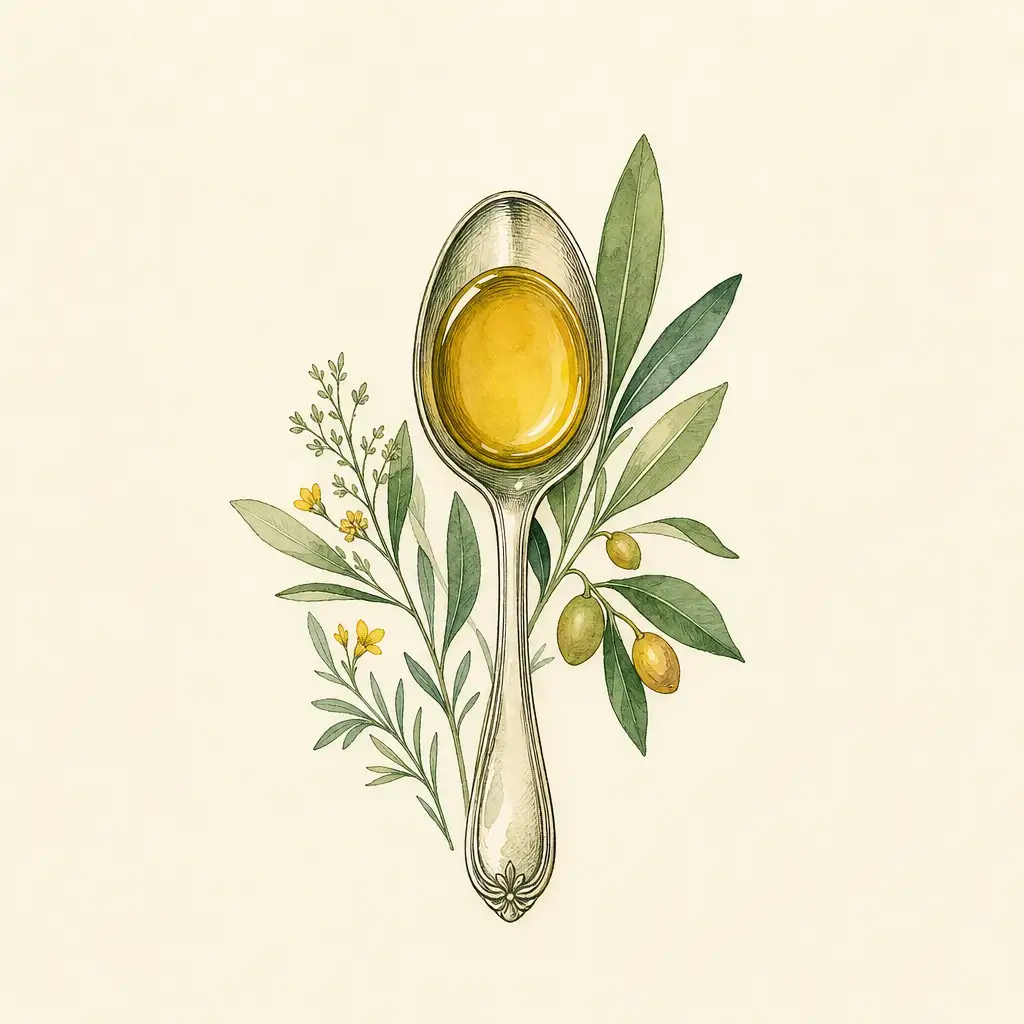
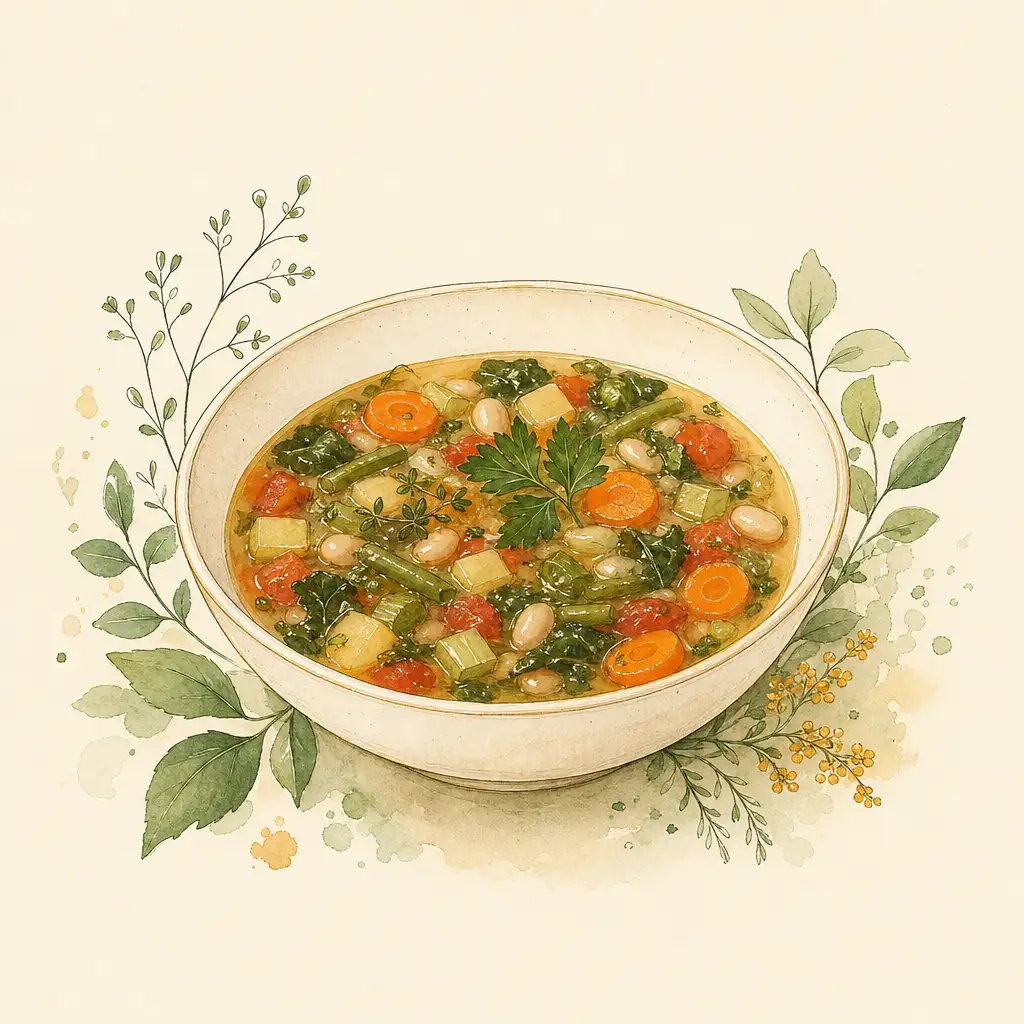
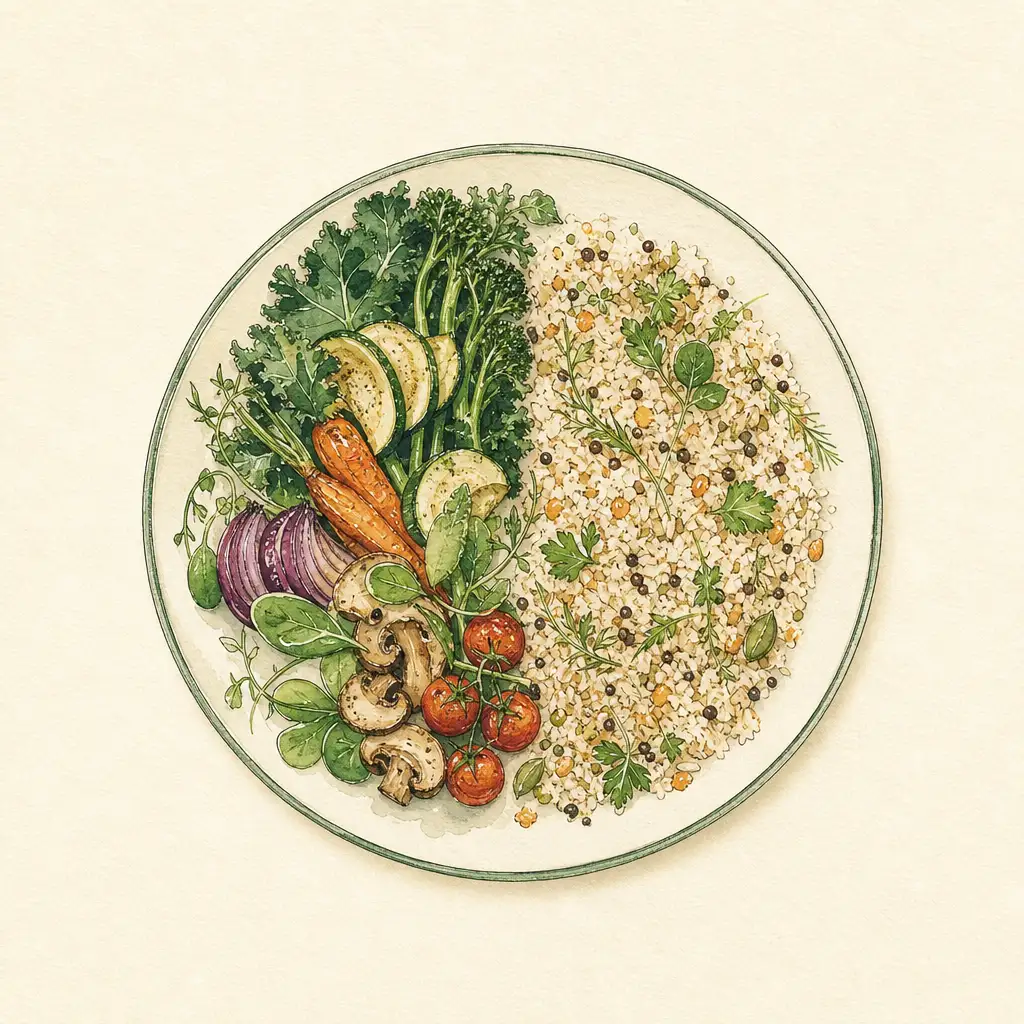
Portions by eye
A cup, a spoon and a plate help you picture an amount. This is not a weight and not a target. Hroomy does not ask for grams.

Add food
The large +. Four tabs.
- Photo. Camera or gallery, an optional note, then Analyze. The picture is used only while it is recognized and is not stored here.
- Words. One sentence: “a sandwich with butter and coffee with milk”. That is one entry with ingredients, not four separate ones.
- Voice. The microphone in the text field. When a phrase is heard, Hroomy analyzes it on the same path and shows “Heard: …”, so you can check the ingredients and the portion. A voice note in Telegram is not transcribed: send the same words as text.
- Barcode and label. Camera, a photo of the code, or the digits. No code — photograph the table on the pack and check the figures against it. Palm oil and E-numbers stay in the ingredient list: a short note sits beside them.
- Eating out. A photo of the menu or a list of dishes. Two or three options for your day. The composition is unknown from the name alone: if you have an allergy, ask the venue. I ordered this writes the dish into the diary.
- My dishes. A dish you have confirmed several times is logged with a portion in one tap, without a new analysis.
The dish card
After an analysis you see the name, the calories, three honesty bands (dish, portion, nutrients), and the buttons.
- Yes, that’s right — you agree with the entry.
- I left some or I ate half — the portion becomes that fraction, and the next tap does not multiply it again.
- Correct — name, numbers, ingredients. Your own numbers stay yours.
- One entry in the shared list is not yet the truth. If people disagree on the figures, the product card is not shown.
Menu, home, shopping
The Menu tab: meal times and a weekly menu. At home: what is in the cupboard and leftovers. Shopping: a list, and on Hroomy+ it can be built from the menu without what you already have. Prices are not invented. Budget: the totals of your receipts, not an estimate of what a dish costs.
History
A review for 7, 30, or 90 days. The average uses only full days where every entry is confirmed. Bars are drawn only for 7 days: a longer period does not draw a slope that says you are eating more. If the numbers do not show a separate trend, the text says so.
Ask your history is a question in ordinary words. The answer uses only your entries for the selected period. If there are no entries, or they do not contain what you asked, the answer says so, with no guess. This is Hroomy+.
Profile and place
The target is recalculated after Save and recalculate. Meal, water, and venue notifications each have their own switch. A venue hint can come only from the Android app: ten minutes in the area, no more than two a day, and a day of silence for the same place. The browser does not locate anyone and does not store a route. There is no Android app in this repository yet: the card stays empty until a phone sends the event itself.
The Family plan is planning on one account: menus and recipes take in the allergies of the people at the table. They do not get separate diaries or sign-ins. Calories are counted for you.
3. Vitamins, minerals, and why they matter
Below is why these are usually mentioned in food. This is not a treatment dose and not a conclusion about you. A percentage is shown only when the database provided a number and the day has enough data. “Unknown” does not mean zero.
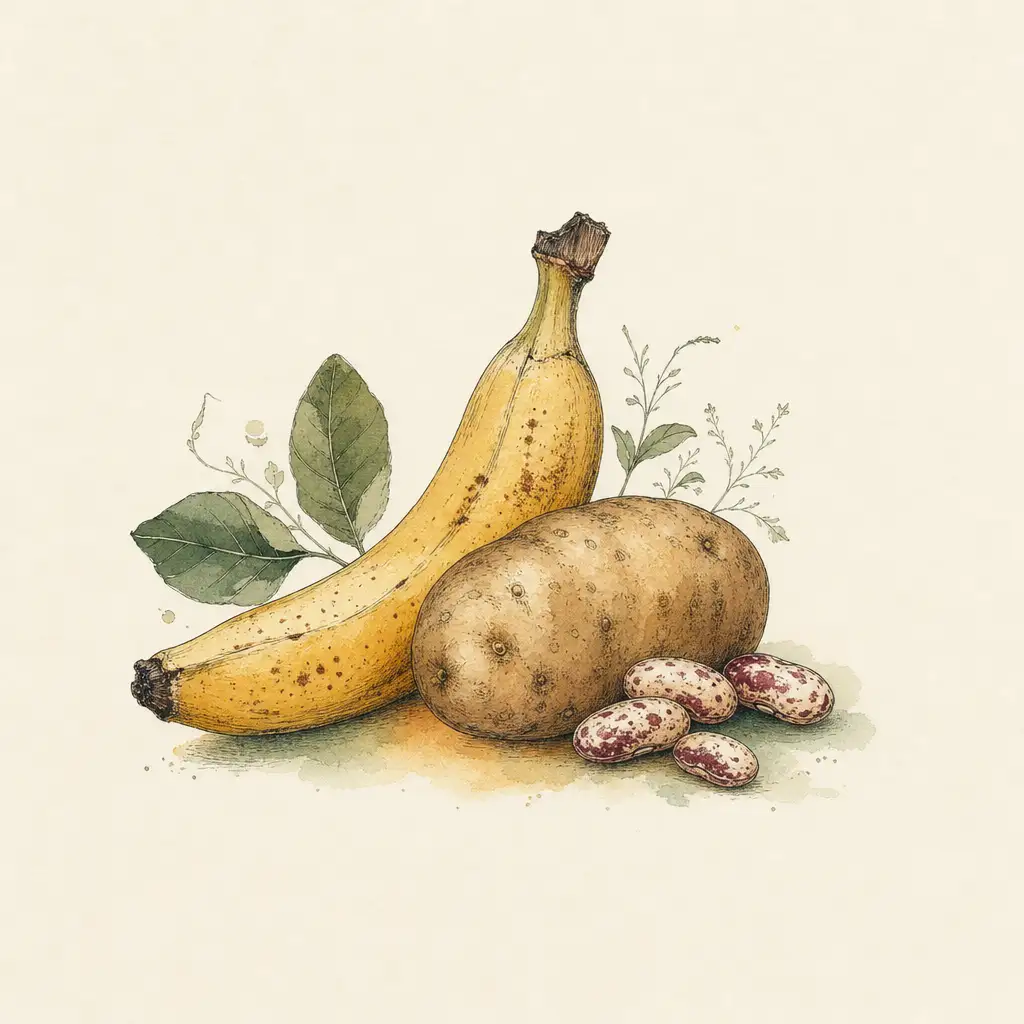
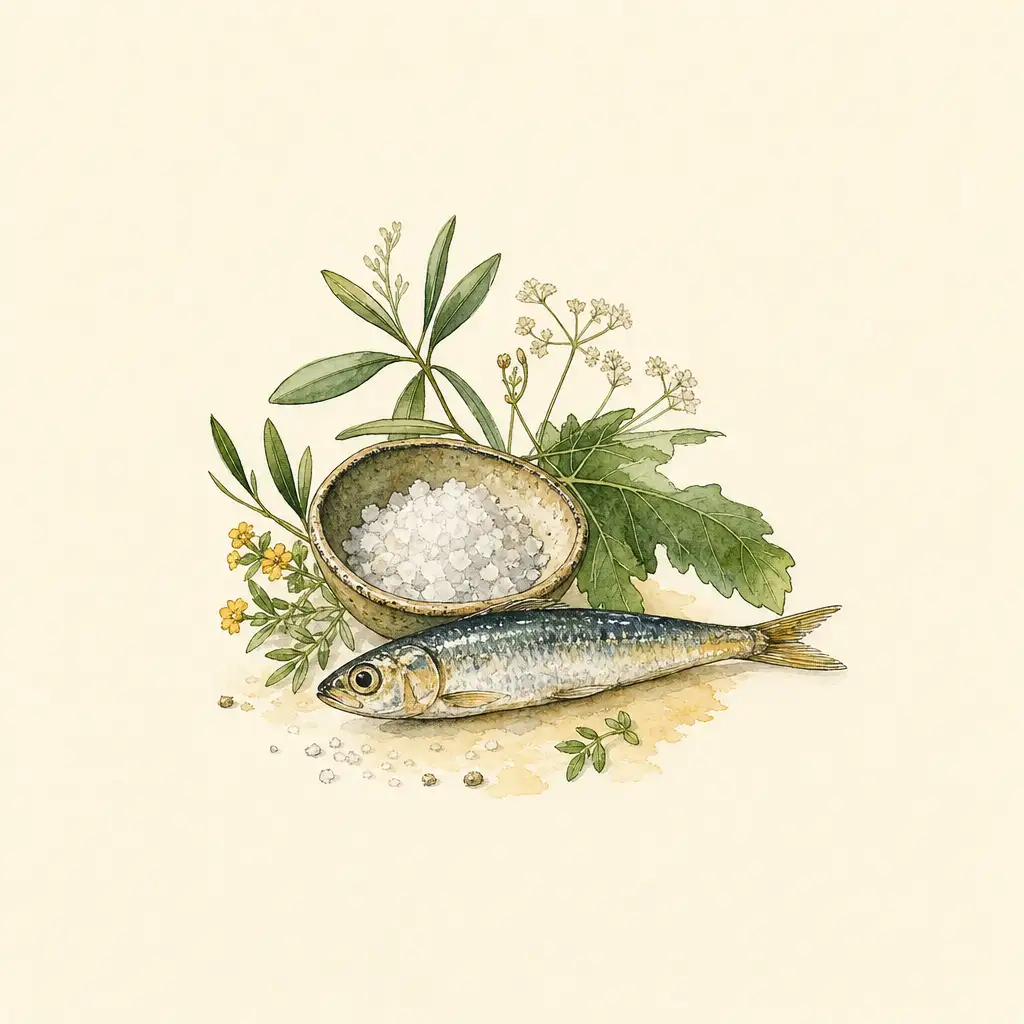
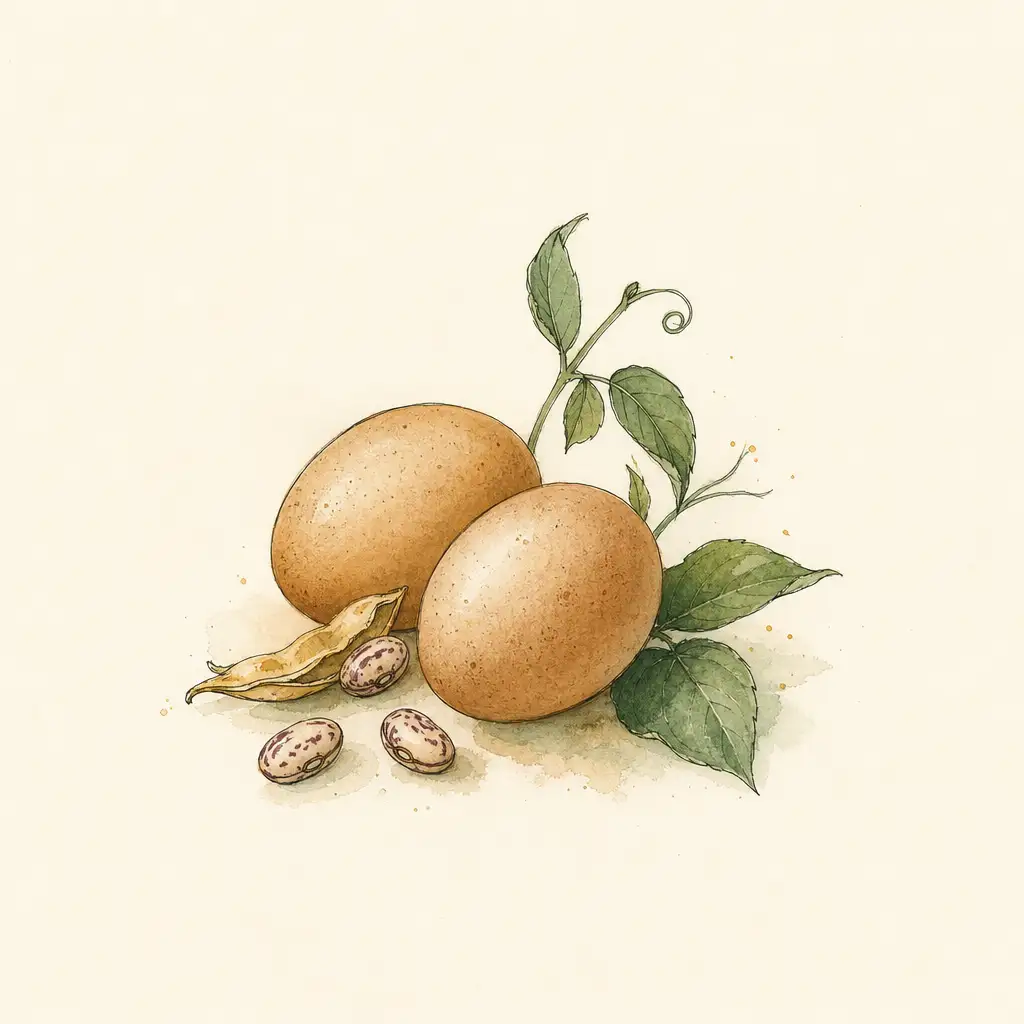
- Vitamin A — sight and skin. Counted only as RAE, without mixing different forms into one pile.
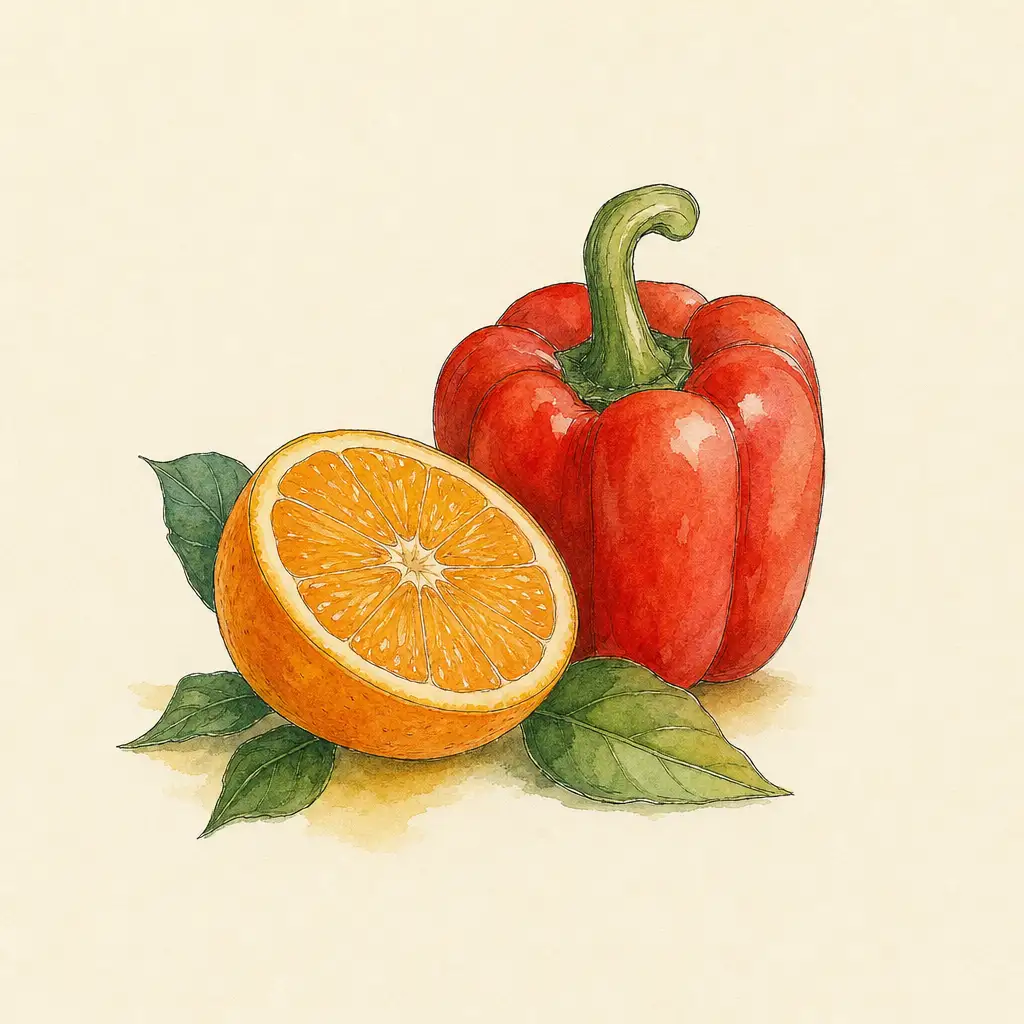
- Vitamin C — an ordinary part of vegetables and fruit. It helps the body use iron from plant foods.
- Vitamin D — bones and muscles, together with calcium. Food often has little of it, so “unknown” is more honest than an invented number.
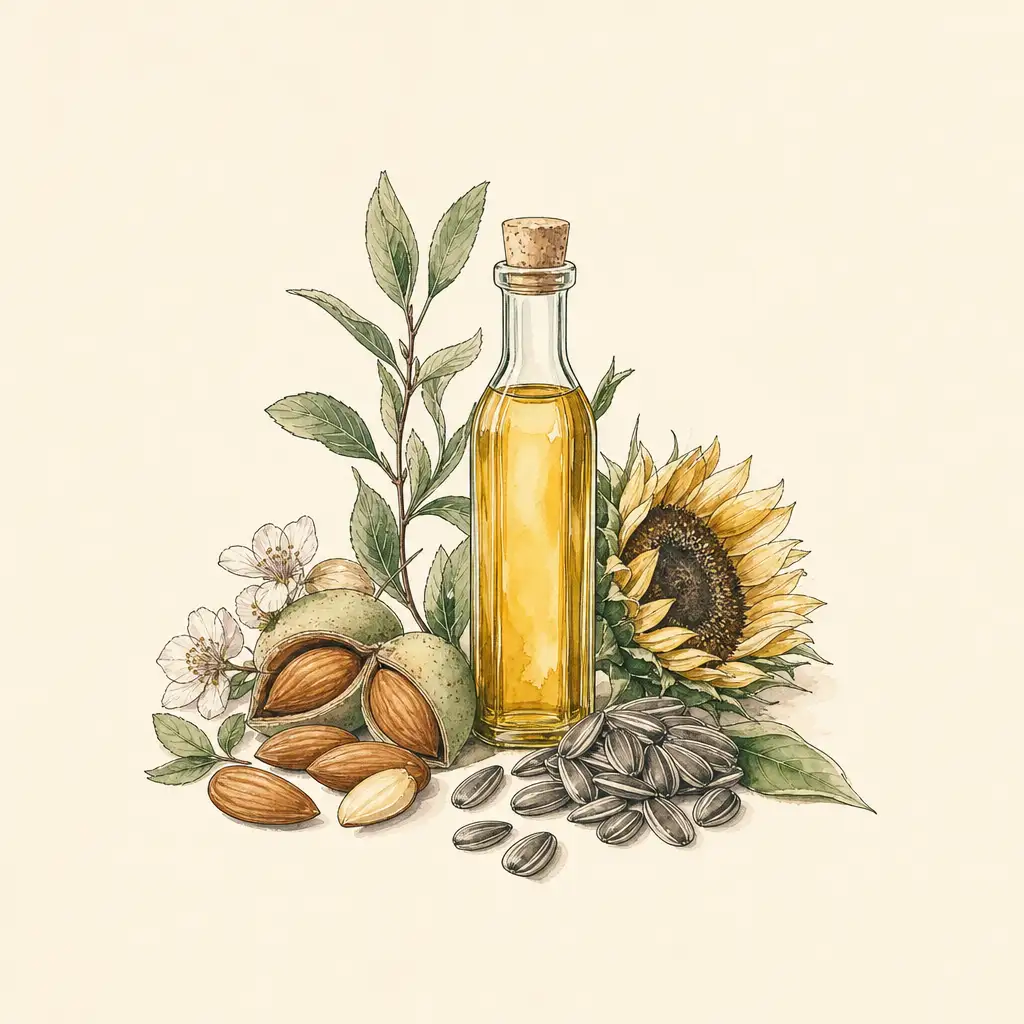
- Vitamin E — nuts, seeds, and oils.
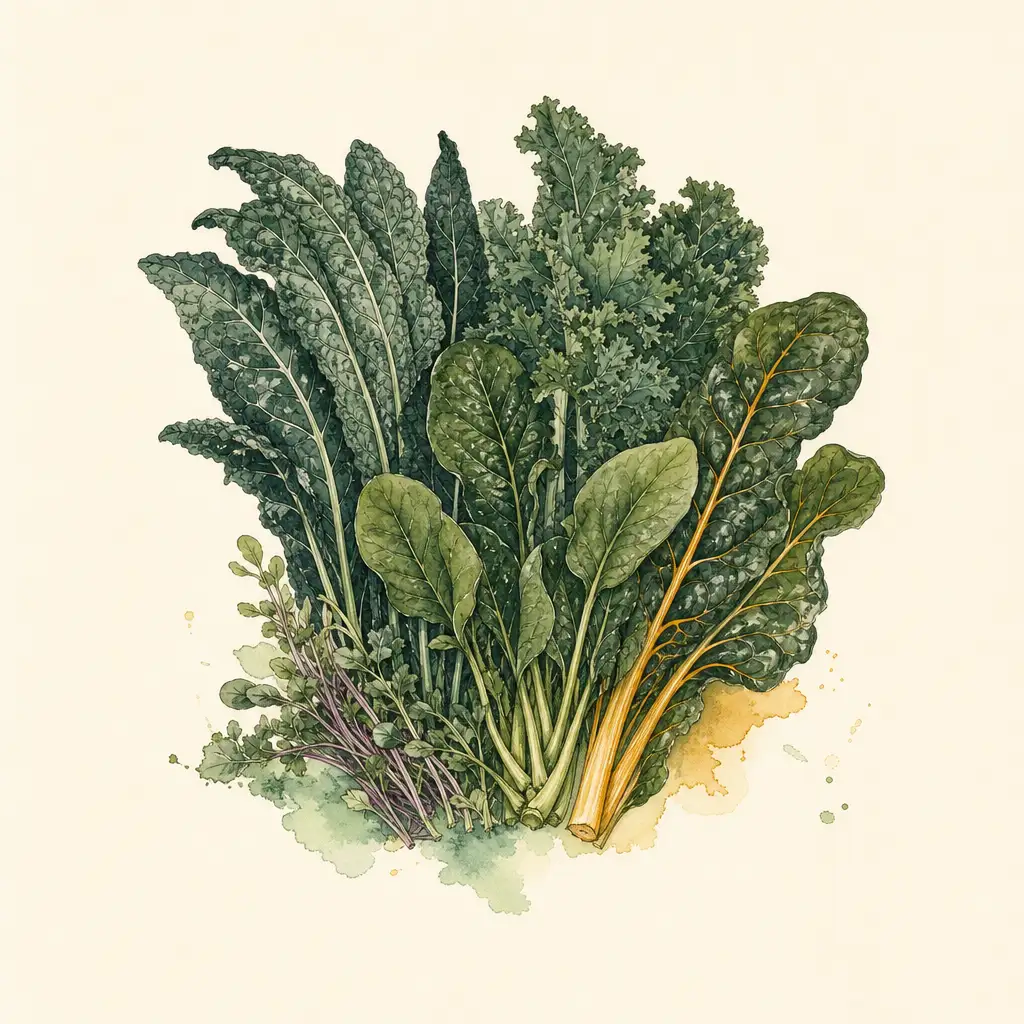
- Vitamin K — leafy greens; it takes part in blood clotting. It is not confused with a bare “vitamin K” mention on a label.
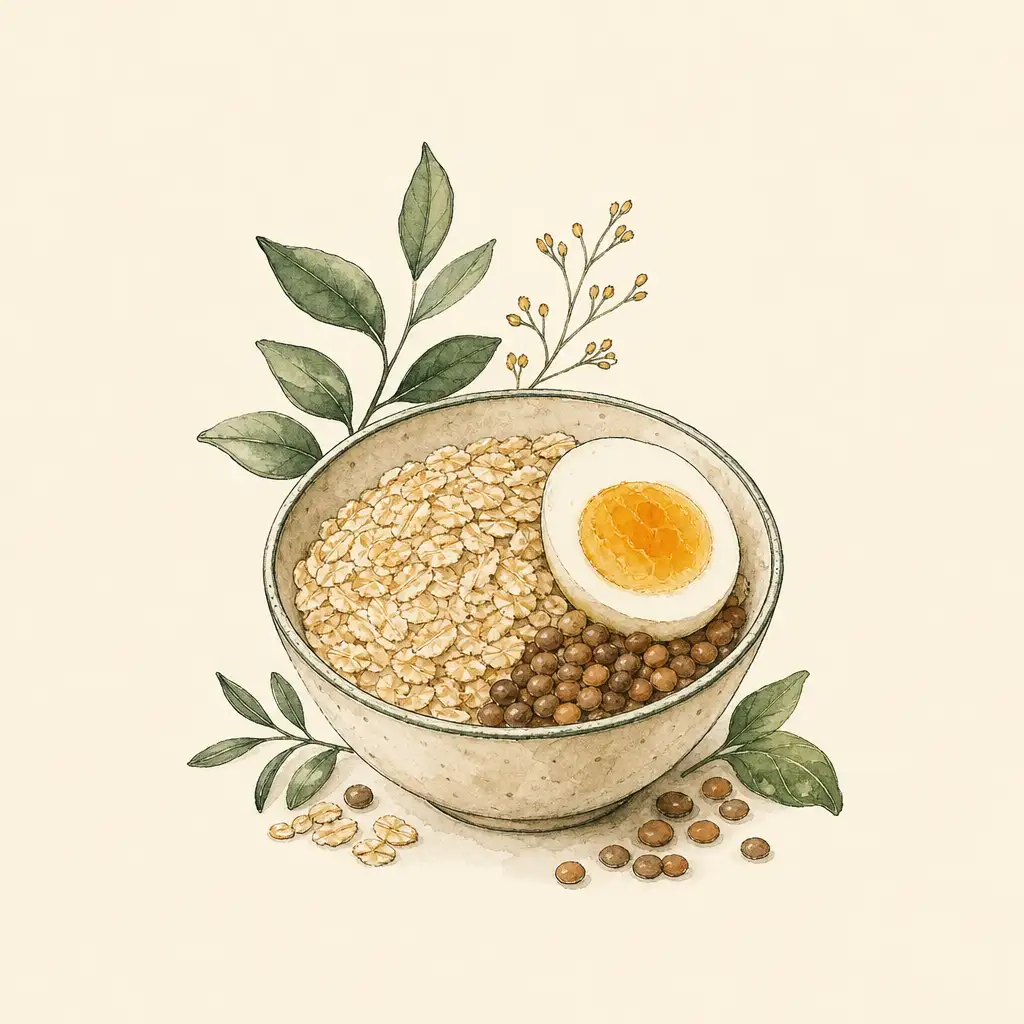
- B1, B2, B3, B5, B6 — the group that helps the body use energy from food. Found in grains, meat, dairy, and legumes.
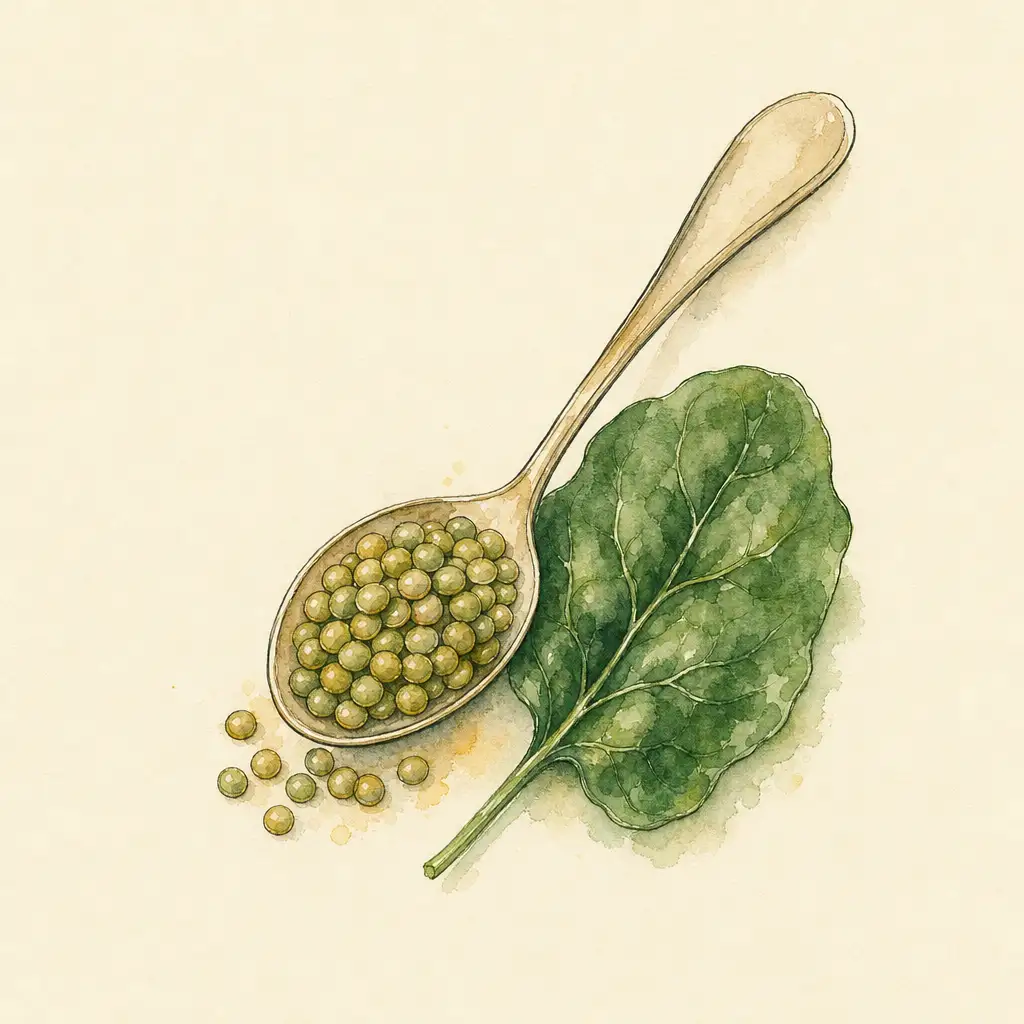
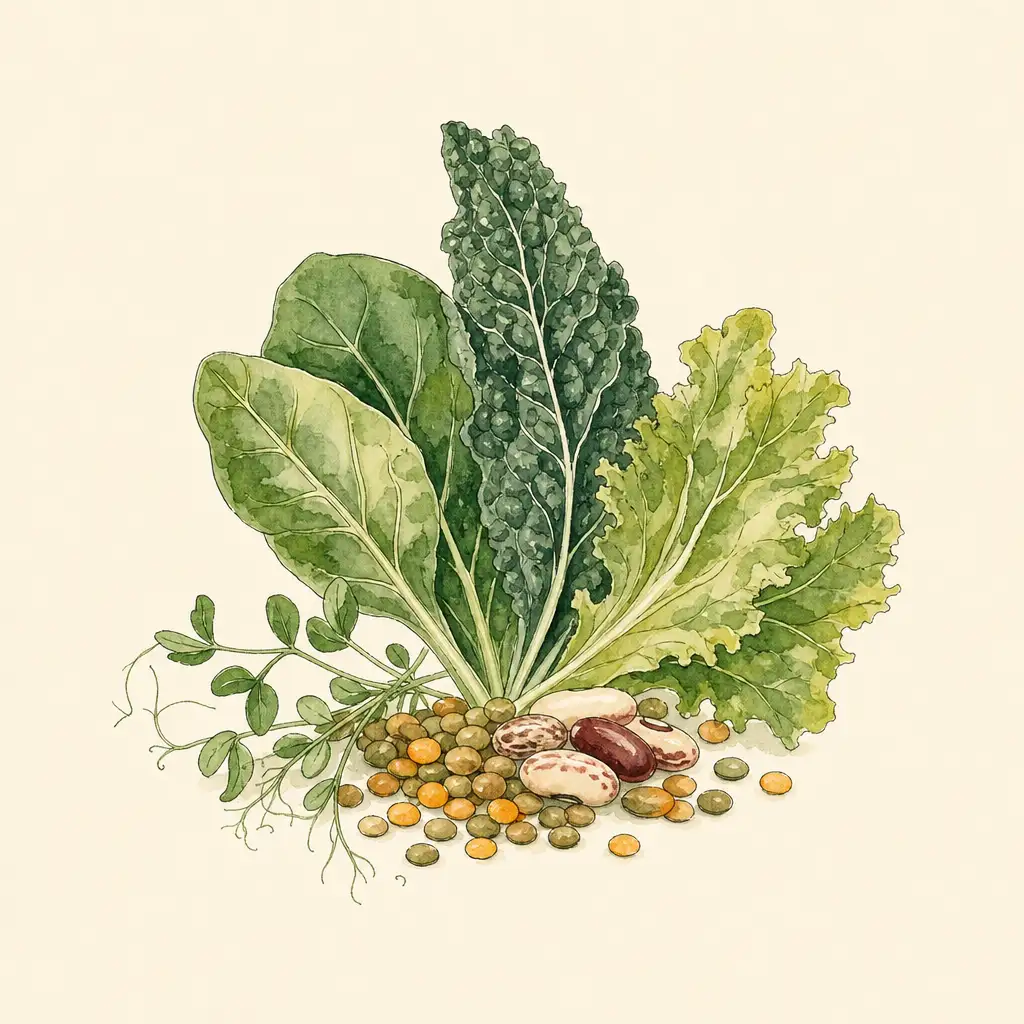
- Folate (B9) — greens, legumes, liver. The total folate is used, not “folic acid from a supplement”.
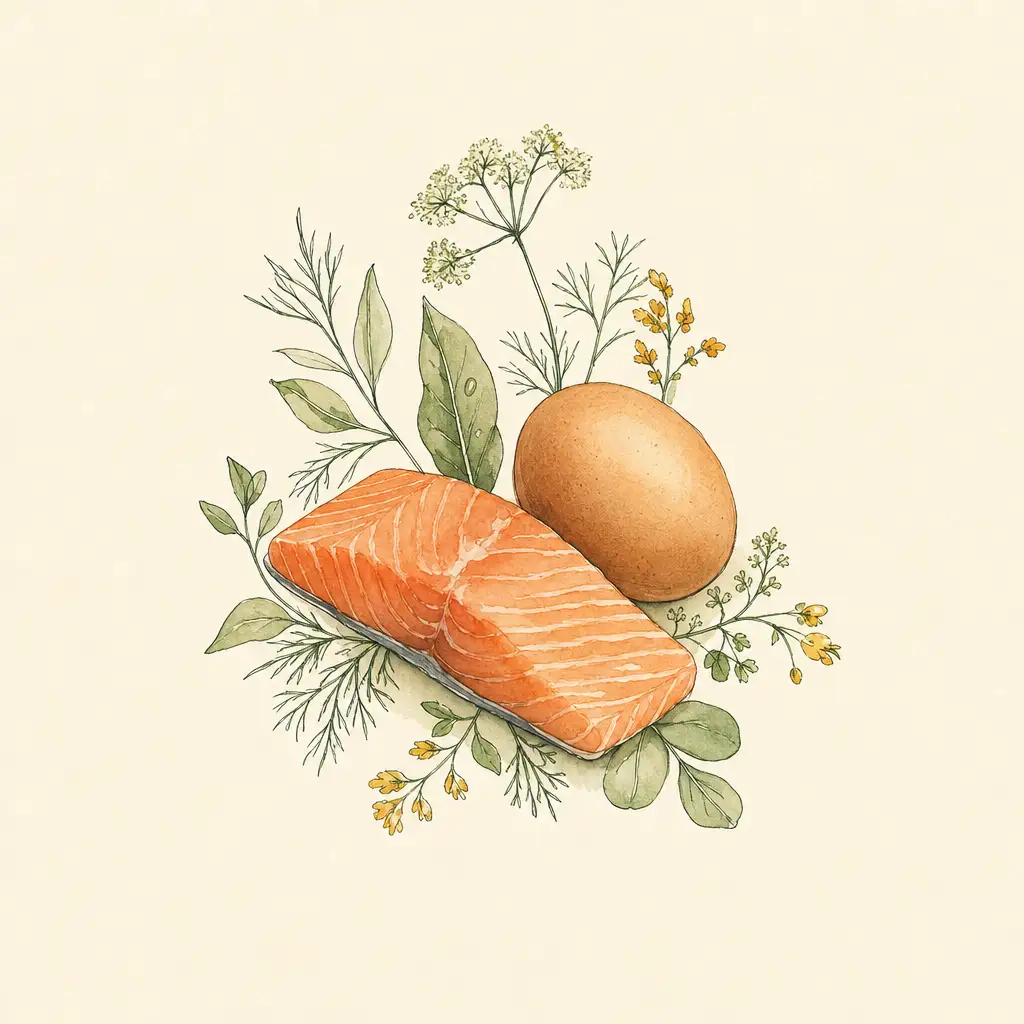
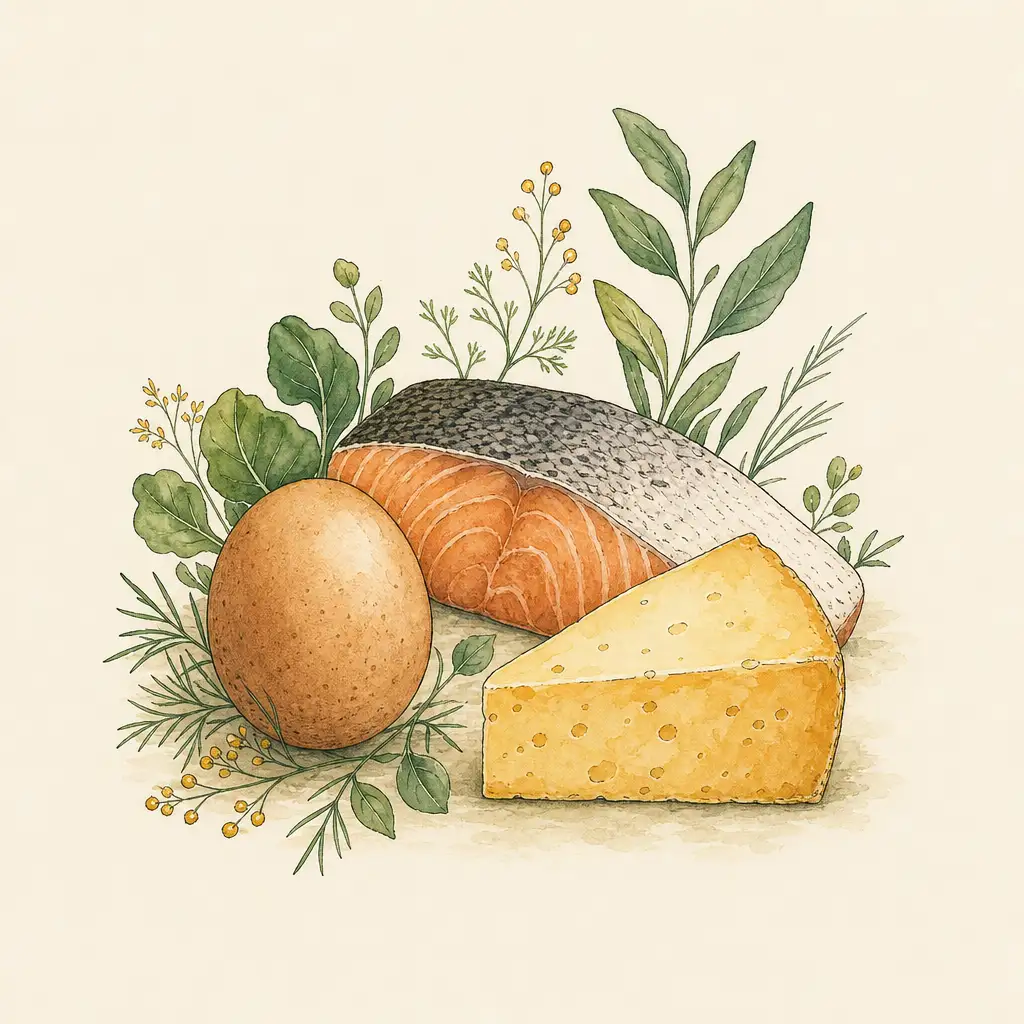
- B12 — mostly animal foods. If the source does not have it, it is not stored as zero.
- Iron — what people mean when they talk about food and tiredness. Iron from plants is absorbed less easily; vitamin C beside it helps. Hroomy does not diagnose.
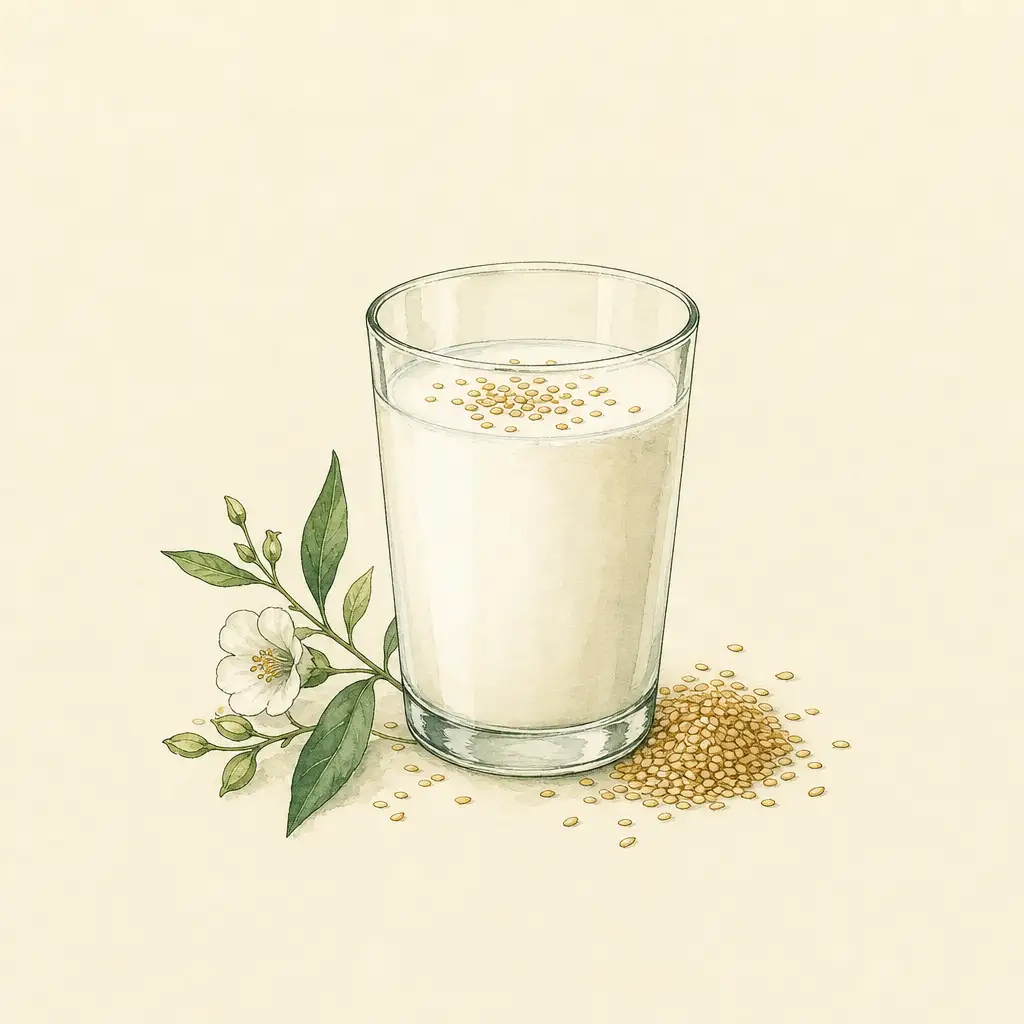
- Calcium — bones and teeth. Dairy, sesame, greens, fortified foods.
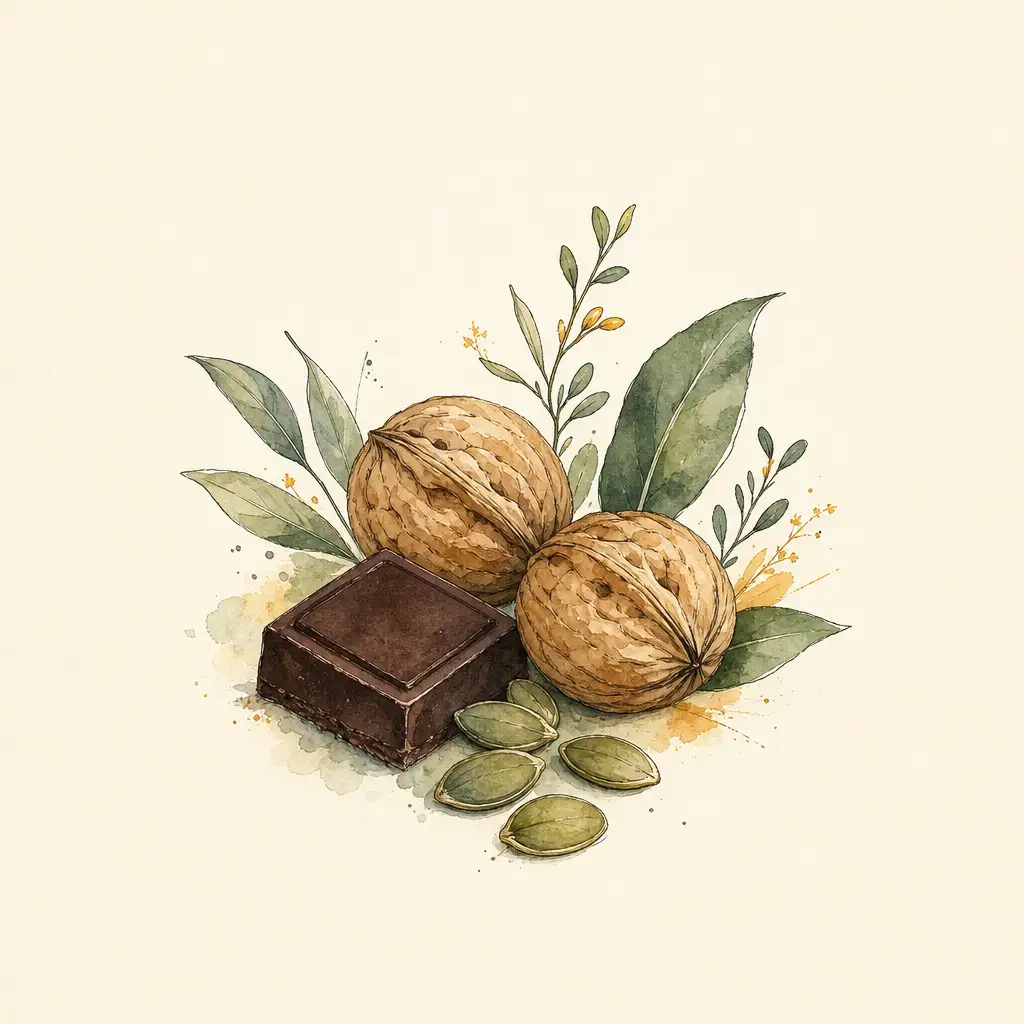
- Magnesium — grains, nuts, greens, cocoa.
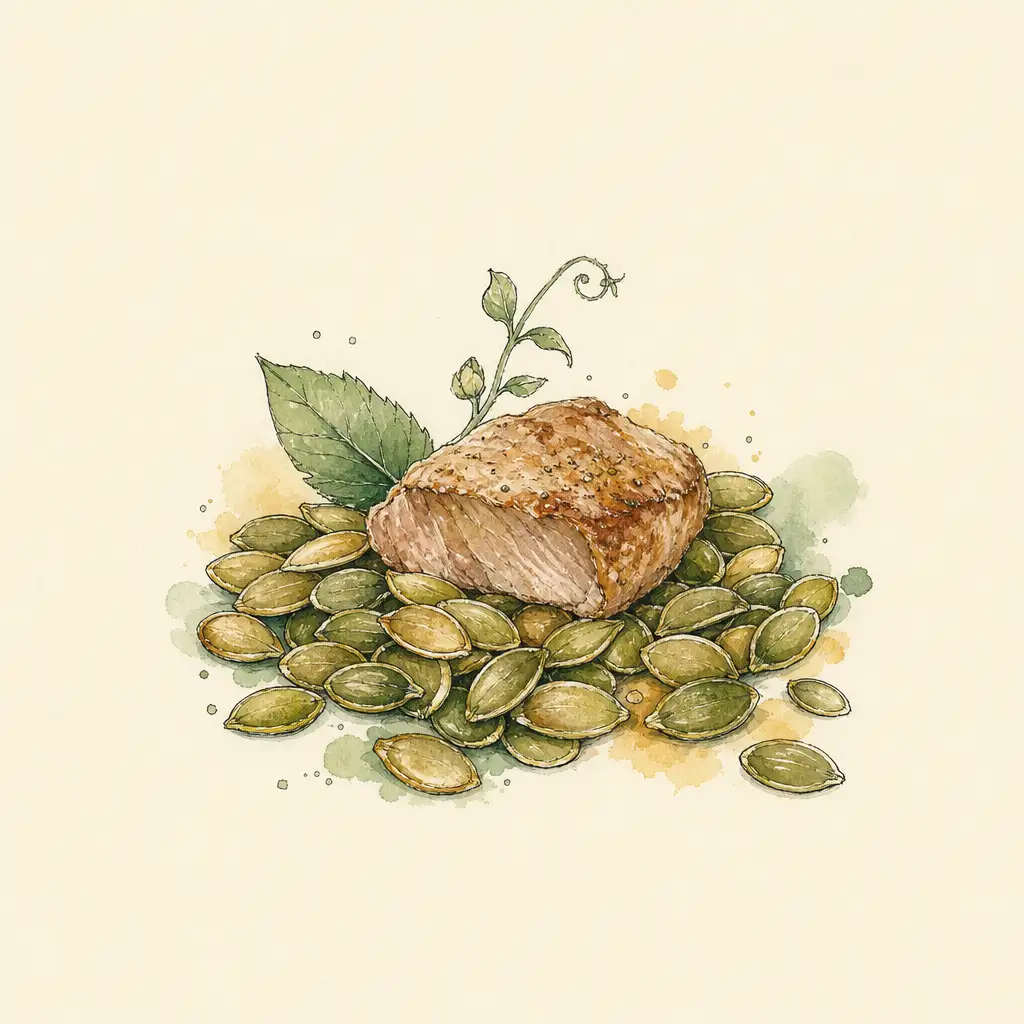
- Zinc — meat, seeds, legumes.
- Potassium — vegetables, fruit, legumes. Next to salt it is often mentioned as a balance, not as medicine.
- Sodium and salt are separate rows. One is not converted into the other automatically.
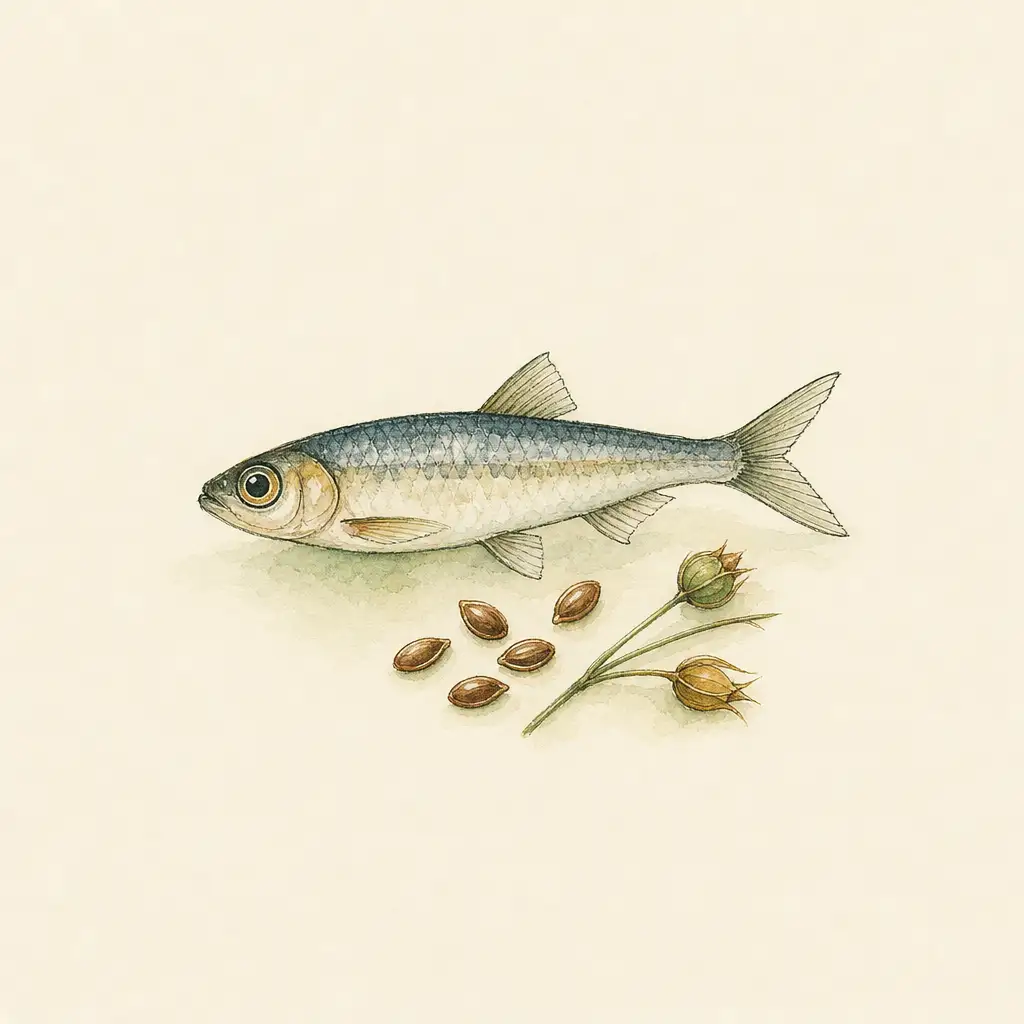
- Iodine — fish, dairy, iodized salt.
- Selenium, phosphorus, copper, manganese — shown when the database has them. There is no treatment target here.
- Omega-3 — the sum of ALA, EPA, and DHA, not one unknown column.
- Choline — eggs, liver, legumes.
4. What is useful to notice
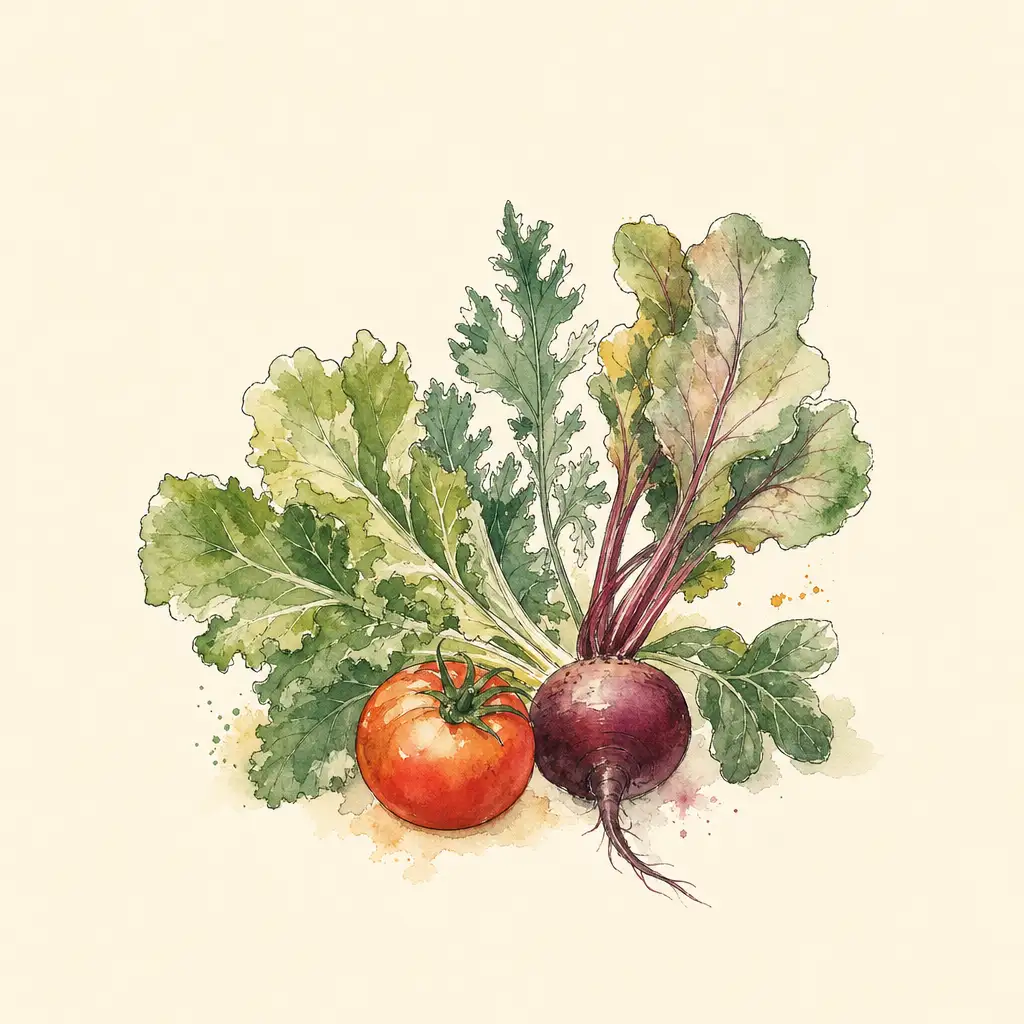

- Protein across several meals holds the day more steadily than one large portion in the evening.
- Fiber — vegetables, fruit, grains, legumes. Advice often starts there when the day is low and the numbers are reliable.
- Variety matters more than a perfect plate. If the day’s data is mostly approximate, Hroomy does not announce a “deficit”. It suggests another simple food.
- Water is marked in glasses. It is your counter, not a medical target.
- Leftovers are better eaten than cooked again. If something is about to spoil, that is said plainly.
5. Salt, sugar, fats, and additives
“Harmful” here is not a verdict on a dish and not a list of enemies. These are things worth noticing on a label when a number exists for them.
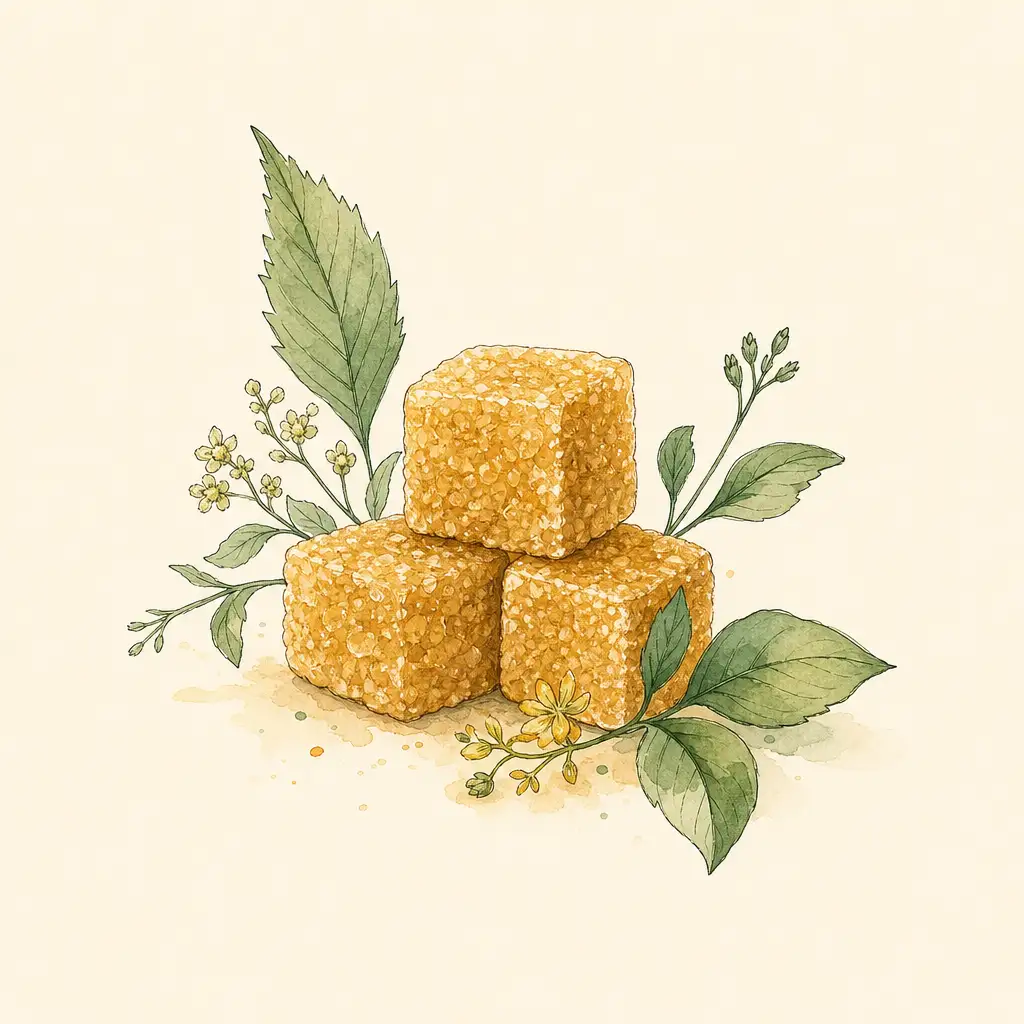
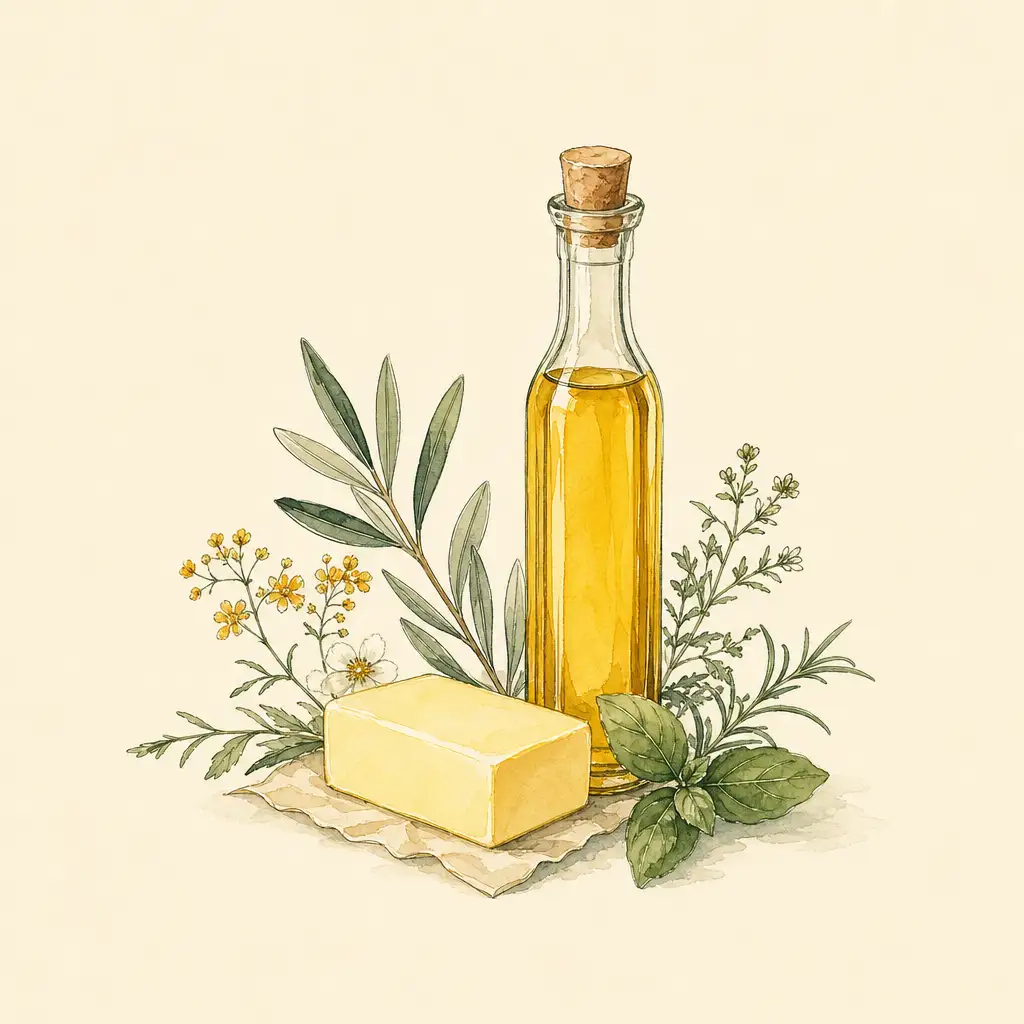
Tap a row. This is a diagram, not a photo of a real pack.
- Added sugars — sugar put into the product, not the sugar that was already in the fruit.
- Saturated fat — butter, fatty meat, some confectionery fats. There is a separate row when the database knows it.
- Trans fat — shown if the source named it. It is not filled in.
- Salt — flavor and shelf life. In a large amount it is simply a lot. Sodium beside it does not replace salt automatically.
- Palm oil — if it is written in the ingredients, the card has a short note. The line is not deleted from the list.
- E-numbers stay in the ingredients too. Known codes get a short plain note, not a scare and not a permission.
- Caffeine and alcohol — separate rows when the data has them. Hroomy does not calculate a “safe dose”.
6. What each plan includes
Sprout — free
A few AI analyses a day: photo, text, and voice in the app. Targets, advice for now with a reason, water, barcode, label, diary, honesty bands, a venue by a button, the seasonal list, a review for 7, 30, and 90 days, Telegram by text and photo.
Hroomy+
Everything in Sprout, analyses without the daily cap, recipes, a weekly menu, a shopping list from the menu, a recipe from a page, and questions about your own log. €3.99 a month or €29.99 a year.
Family
Everything in Hroomy+, plus planning for people at one table: their allergies in the menu, recipes, and shopping, up to six people. They do not get separate accounts. €6.99 a month or €49.99 a year.
The exact limits are on the Plans page. The limits of accuracy are in the medical disclaimer.
7. Telegram commands
The bot does the same things through the shared diary. It does not transcribe a voice note. Commands:
- /today — the day. /water — a glass. /undo — undo the last entry.
- /rescue — what to eat next. /recipes — recipes. /menu — the menu.
- /pantry, /shopping, /buy, /leftovers, /dishes.
- /out — a photo of a venue menu. /history, /history 30, /history 90 — the list of days.
- /season — the season. /import plus a link — a recipe from a page. /ask plus a question — your entries for 30 days.
- /budget, /spend, /mode, /profile, /plan, /lang, /guide, /help.
The full list is on /help. This page also opens with /guide.
8. Cooking and storage
Water, oil, and the way a dish is cooked change the number per 100 g. Hroomy does not keep one percent for every dish. The date on a label is not the whole story either.
Raw and cooked
A food can lose water or take it in. Then the calories per 100 g of the cooked food differ from the raw food even with no new energy. For a grain it matters whether it is dry or boiled. For meat, whether it is raw or cooked.
Oil and sauces
Oil, butter, sugar, and sauce can be a small share of the weight and still change the dish. A photo often hides them. When it matters, Hroomy asks briefly instead of inventing a spoon.
Leftovers
- USDA advises putting perishable food in the fridge within two hours at room temperature, and within one hour in heat above 32 °C.
- For many chilled leftovers it names 3 to 4 days near 4 °C. The time depends on the dish and on how it was kept.
- A reheated leftover should reach 74 °C in the middle. We do not invent our own rule without that source.
Source: USDA — Leftovers and food safety.
9. Sources
Where the reference points on this page come from. This is an explanation for an everyday choice, not personal advice.
- WHO — Healthy diet — what the WHO calls a usual healthy diet.
- EFSA — Dietary reference values — European reference values for needs. Not a doctor's conclusion.
- NIH Office of Dietary Supplements — fact sheets on vitamins and minerals.
- USDA — Leftovers and food safety — time and temperature for leftovers.
- USDA FoodData Central — the composition of foods, raw and cooked.
- European Commission — food information — what a label has to show.